
Labor shortages, compressed schedules, limited jobsite space, and increasingly complex door hardware are making it harder to complete commercial openings efficiently in the field.
Pre-installation offers a different approach.
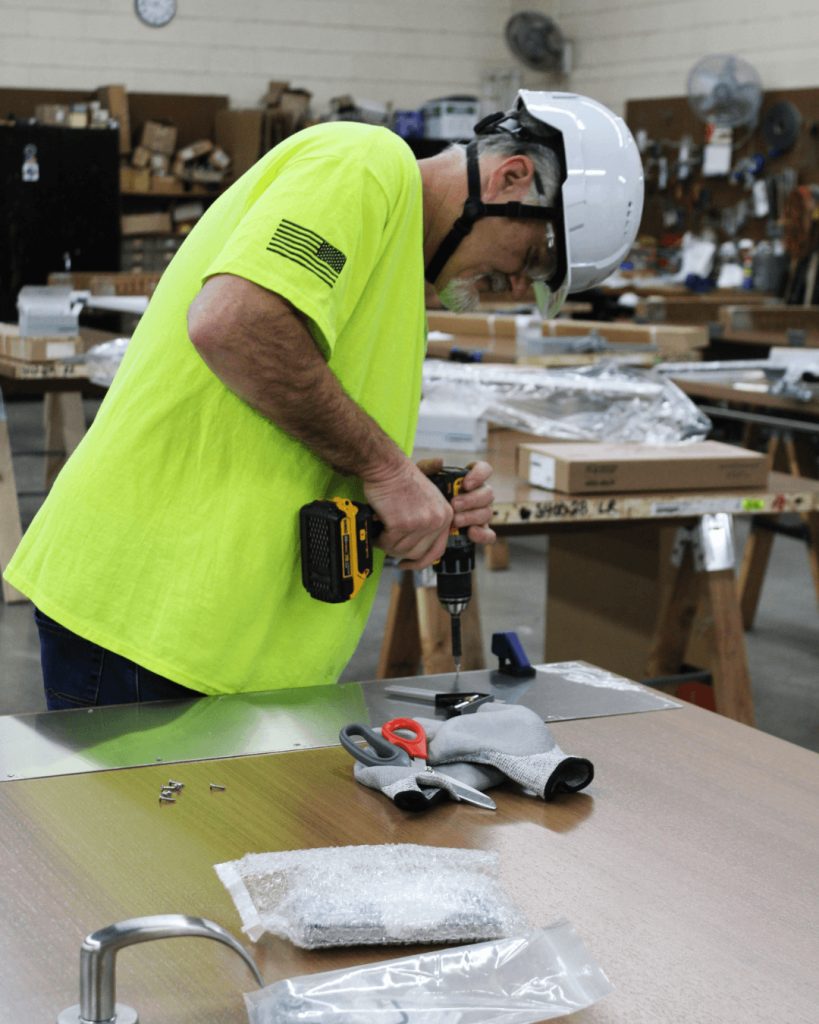
Instead of shipping doors and boxes of hardware to the project and relying on field crews to assemble each opening on site, commercial door hardware is installed in a controlled environment before the doors are delivered. Trained hardware specialists install the applicable components, validate the assemblies, and prepare the doors for efficient installation in the field.
For contractors, the benefit goes well beyond reducing installation labor. Done correctly, pre-installation can simplify jobsite logistics, improve quality control, reduce material handling, and help keep the project moving.
At Unified Door & Hardware, we believe the key is bringing pre-installation into the conversation early, ideally during budgeting and preconstruction. That allows the contractor and project team to determine where pre-installation creates the greatest value before field labor and installation scopes have been committed.
Pre-installation can be easy to evaluate as a simple comparison:
What does pre-installation cost versus what would it cost to install the hardware in the field?
But that comparison doesn't capture the full picture.
Traditional field installation brings additional costs and responsibilities that may not appear in the labor number itself. Hardware must be received, inventoried, stored, distributed, unpackaged, matched to individual openings, installed, adjusted, and, in the case of electrified hardware, tested and coordinated.
Every one of those activities requires time, labor, supervision, and jobsite space.
Pre-installation shifts much of that activity away from the project site and into a controlled environment. Instead of asking only, "What does it cost to install the hardware?" contractors can ask a more meaningful question:
"What does it cost us to manage the entire hardware installation process in the field?"
That is where the value of pre-installation becomes much clearer.
The Field Advantages of Pre-Installation
Moving commercial door hardware installation off-site can produce benefits throughout the project.
Accelerate Installation Schedules
Hardware installation can occur off-site while construction continues in the field. Once frames and openings are ready, prepared doors can arrive with much of the hardware work already completed.
This reduces the number of operations required at the opening and can help contractors move more quickly from door delivery to a completed opening.
Reduce Field Labor Requirements
Commercial hardware installation requires skilled labor and specialized knowledge, particularly on projects involving complex hardware sets, fire-rated openings, access control, and electrified hardware.
Pre-installation transfers a significant portion of that work to trained hardware specialists, allowing contractors to deploy limited field labor where it provides the greatest value.
Reduce Hardware Inventory Management
Hundreds of openings can mean thousands of individual hardware components arriving at the jobsite.
Someone has to receive them.
Someone has to inventory them.
Someone has to store them.
And someone has to find the right components when each opening is ready.
Installing applicable hardware before shipment dramatically reduces the amount of loose hardware inventory that needs to be managed at the project site. It can also reduce the need for dedicated hardware storage space and the labor associated with locating, distributing, and tracking individual components.
Identify Problems Before They Reach the Jobsite
A controlled pre-installation process creates an opportunity to identify issues earlier.
Hardware specialists can validate the assembly, identify missing or incorrect components, and address installation concerns before the door reaches the field.
Electrified hardware can also be tested before shipment. This gives the field team a known operating baseline and can make troubleshooting much easier if an issue arises later during power, access-control, or low-voltage integration.
Finding a problem before delivery is almost always easier than discovering it when an installer is standing at the opening.
Reduce Jobsite Waste and Cleanup
Commercial hardware generates a considerable amount of packaging.
When applicable hardware is unpacked and installed off-site, fewer cartons, boxes, bags, and packaging materials need to be transported to and handled at the project site.
That means less material for field crews to move, organize, and ultimately dispose of.
Help Protect Finished Doors
Factory-finished wood doors are often delivered into an active construction environment where they can be exposed to other trades, equipment, dust, moisture, and ongoing construction activity.
Because pre-installed doors require less work after delivery, contractors may have greater flexibility to schedule their arrival closer to the point when they are actually needed.
Less time on the jobsite can mean less opportunity for finished doors to be damaged before turnover.
Where Does Pre-Installation Make the Most Sense?
Not every project or opening will benefit equally from pre-installation.
Projects with significant quantities of factory-finished commercial wood doors can be particularly strong candidates because much of the applicable hardware can be installed before the doors arrive on site.
Projects with complex hardware sets, electrified hardware, access-control components, or demanding installation schedules may also offer significant opportunities.
Painted hollow metal doors require additional planning. When doors will receive their final finish in the field, the painting sequence must be coordinated with the pre-installation scope so installed hardware does not interfere with finishing or create unnecessary removal and reinstallation.
The objective isn't necessarily to pre-install every piece of hardware on every opening.
The objective is to identify the openings and components where off-site installation delivers meaningful value to the project.
Timing matters.
The greatest opportunity to evaluate pre-installation is during budgeting and preconstruction, before the project's installation labor has been awarded.
At that stage, contractors can clearly define what will be installed off-site, what remains in the field, and which trade is responsible for each portion of the opening.
Once a subcontractor has already been awarded the complete hardware installation scope, introducing pre-installation can become more complicated. Scope may need to be removed, credits negotiated, and responsibilities reassigned.
Early planning avoids those complications.
It also allows pre-installation to become part of the project's overall labor and logistics strategy rather than an option considered after the installation plan has already been established.
At Unified Door & Hardware, pre-installation is more than installing hardware on a door before it ships. It is part of The Total Opening Solution™, supported by trained hardware specialists, defined processes, quality controls, and dedicated safety professionals.
Openings can be prepared, identified, and organized around the construction sequence, including by floor, area, or project phase, helping contractors receive material in a way that supports field installation.
Just as important, the process establishes accountability before the doors leave our facility.
When an issue occurs as a result of our pre-installation work, Unified takes responsibility for correcting it. That gives contractors a single point of accountability for the work performed before the opening reaches the jobsite.
The best time to simplify field installation isn't when the door arrives at the jobsite.
It's before the door ever gets there.
By moving applicable commercial door hardware installation into a controlled environment, contractors can reduce field labor demands, simplify hardware logistics, identify problems earlier, decrease jobsite waste, and potentially shorten the path from door delivery to a completed opening.
But the greatest value comes from planning early.
Bringing Unified into the conversation during budgeting and preconstruction allows the team to evaluate the openings, define the right pre-installation scope, and incorporate that strategy into the project before field labor is committed.
Pre-installation isn't simply about installing hardware somewhere else. It's about removing work, uncertainty, and complexity from the jobsite.
And on today's increasingly demanding construction projects, that can make a significant difference.
This site is protected by reCAPTCHA and the Google Privacy Policy and Terms of Service apply.