
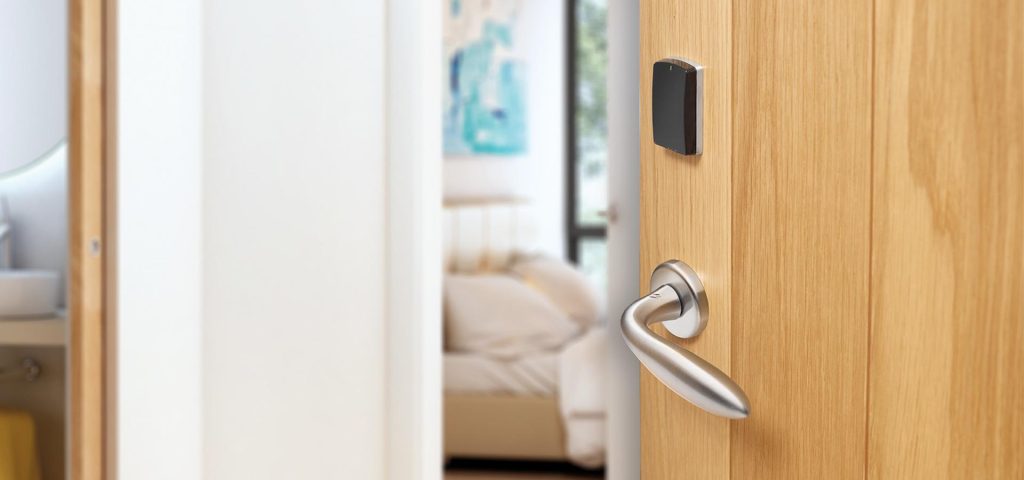
Access control and mechanical hardware influence far more than security. Decisions made during design affect construction schedules, operational efficiency, system integration, and long-term building management. Addressing these requirements early gives project teams greater control and helps prevent costly changes later in construction.
Unified Door and Hardware works with owners, developers, and design teams during the earliest stages of a project, helping shape access control strategies before specifications are finalized and construction begins.
Access control determines who can enter specific areas of a building and under what conditions. Nearly every facility depends on these systems to manage movement, including residential buildings, hotels, healthcare facilities, schools, and commercial properties.
As technology evolves, owners increasingly expect access control to support a broader user experience. Modern platforms often combine access credentials, visitor management, intercom functionality, and building operations within a single system. Meeting those expectations requires thoughtful planning long before installation begins.
Delayed decision-making is one of the most common sources of cost increases and project disruptions. Because lock selections affect wiring, door preparation, hardware, software integration, and building operations, revisiting those decisions after construction begins often creates unnecessary expenses and corrective field work.
Addressing these requirements during design allows project teams to define responsibilities and identify scope gaps before procurement begins. Owners gain a better understanding of how the building will operate, while contractors move into construction with greater certainty around scope and execution.
A successful process typically follows three steps:
Access control and architectural hardware are often managed as separate disciplines. One team focuses on electronic access while another focuses on mechanical hardware, leaving coordination for later in the process.
In reality, every opening functions as a connected system. Hardware selections influence security operations, electrical infrastructure, software platforms, and the occupant experience. Evaluating these requirements together helps teams make better decisions during construction.
This becomes especially important in luxury residential and hospitality environments where aesthetics play a larger role in the overall design. Owners and architects often want electronic locks and mechanical hardware to maintain a consistent appearance throughout the property, requiring expertise across both disciplines.
Building owners continue to adopt mobile credentials, NFC-enabled access, and wireless locking systems to improve convenience for occupants and simplify day-to-day management.
As these technologies become more common, access control decisions require broader coordination. Selecting the right solution means accounting for building infrastructure, code requirements, hardware compatibility, and long-term operational needs. Early planning helps avoid costly modifications and gives buildings greater flexibility as technology continues to evolve.
Unified approaches access control and mechanical hardware as a single scope rather than separate disciplines. By evaluating the entire opening early, teams help owners align operational goals, design intent, and construction requirements while reducing scope gaps and rework.
That perspective is a core component of Unified's Total Opening Solution™. Rather than leaving coordination to multiple vendors, Unified works directly with manufacturers, contractors, and project stakeholders to keep the opening aligned throughout design and construction.
Coordinating these requirements becomes especially important on complex projects. Access control systems must support building operations and aesthetics while meeting architectural expectations, particularly in high-end residential, hospitality, and commercial environments. Unified helps owners balance both requirements without compromising either.
Because access control continues to evolve long after a building opens, Unified remains a resource for service, upgrades, and operational changes that help owners maximize system performance throughout the life of the facility.
This site is protected by reCAPTCHA and the Google Privacy Policy and Terms of Service apply.